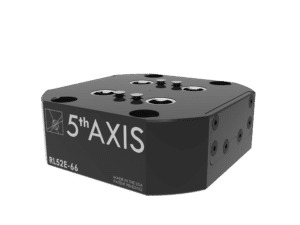
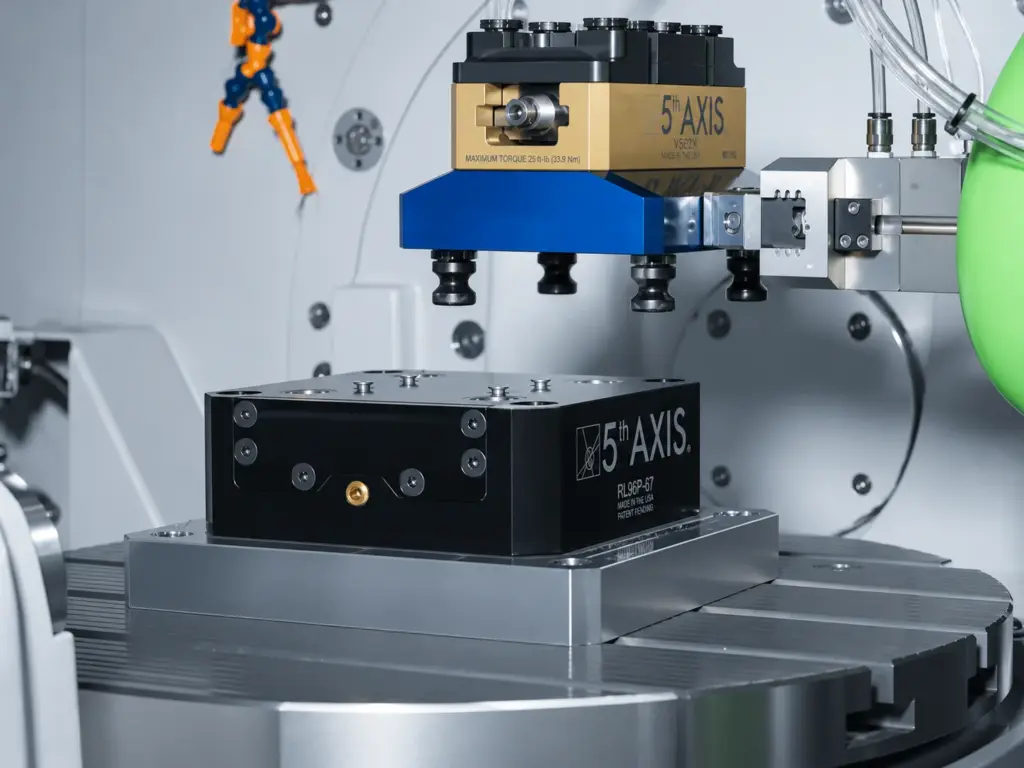
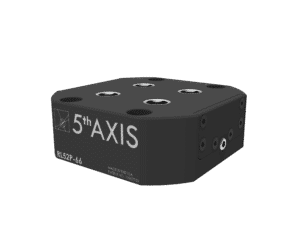
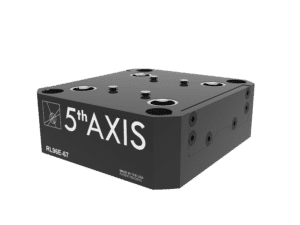
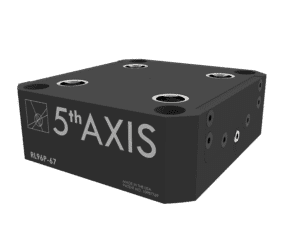
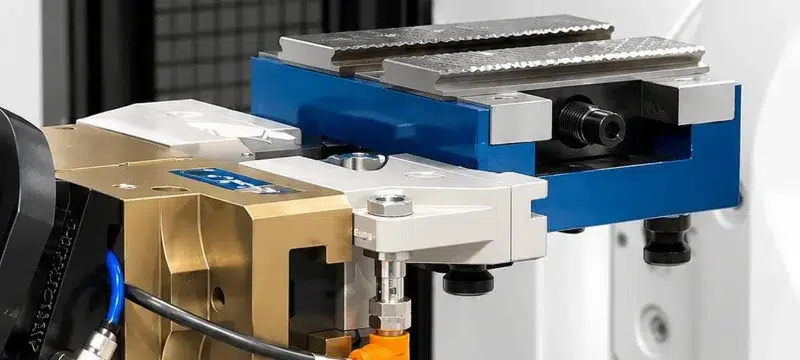
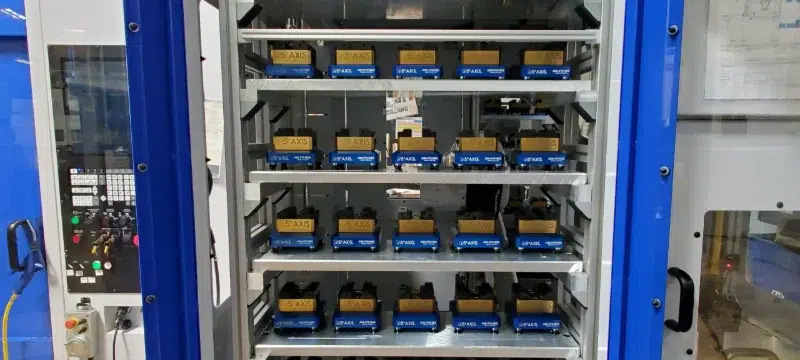
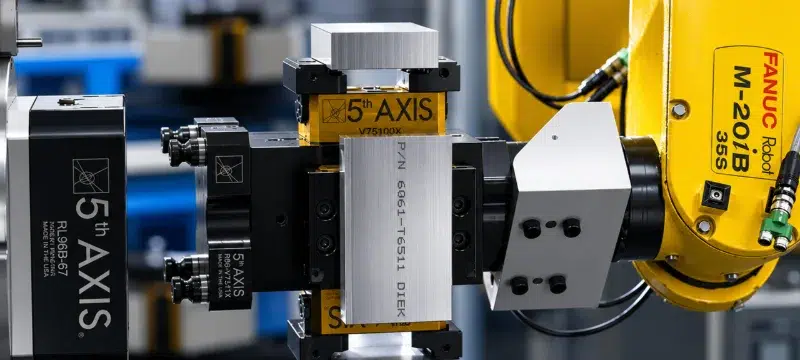
Streamline your workflow with a game-changing automation chuck. Patent-pending ejectors lift tooling seamlessly out of the chuck for the robot, while a continuous air blast handles chip and coolant management most lights-out setups overlook.
Lights-out manufacturing fails at the handoff, not the cut.
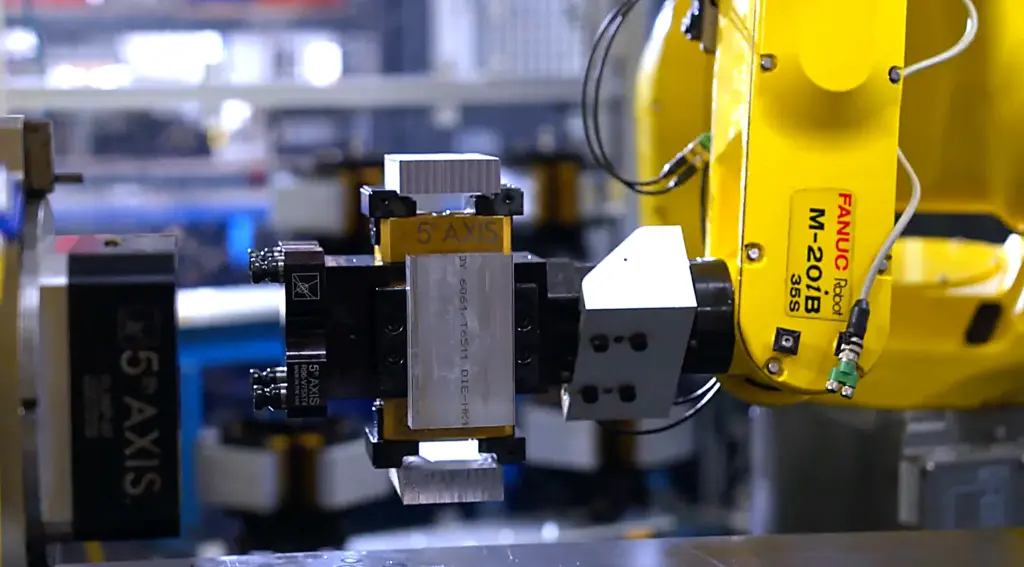
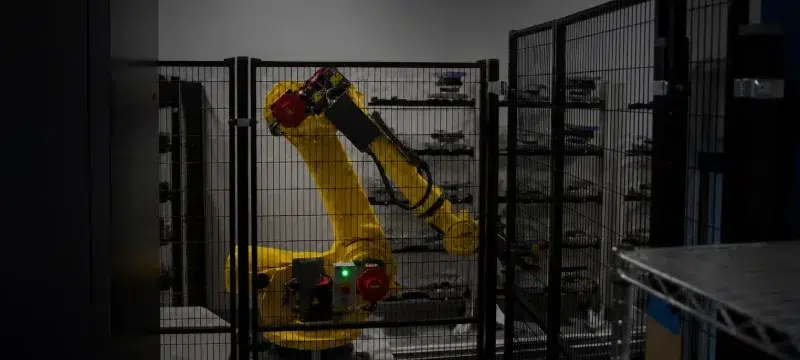
A robot can load and unload a machine all day, until a fixture misloads, a chip jams the interface, or the tooling doesn’t release cleanly and nobody’s on the floor to notice. That handoff between robot and machine is one of the most often overlooked complications in true lights-out manufacturing.
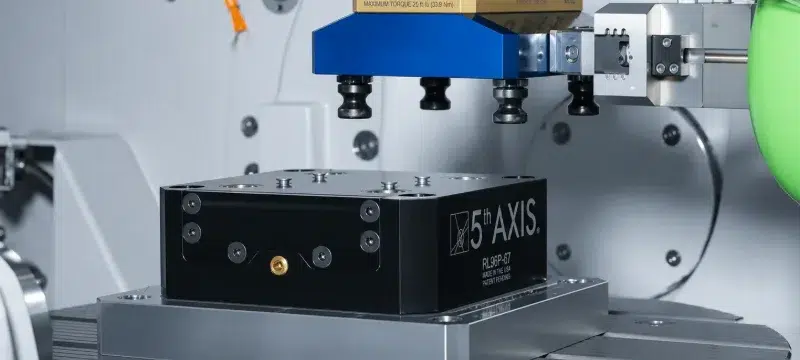
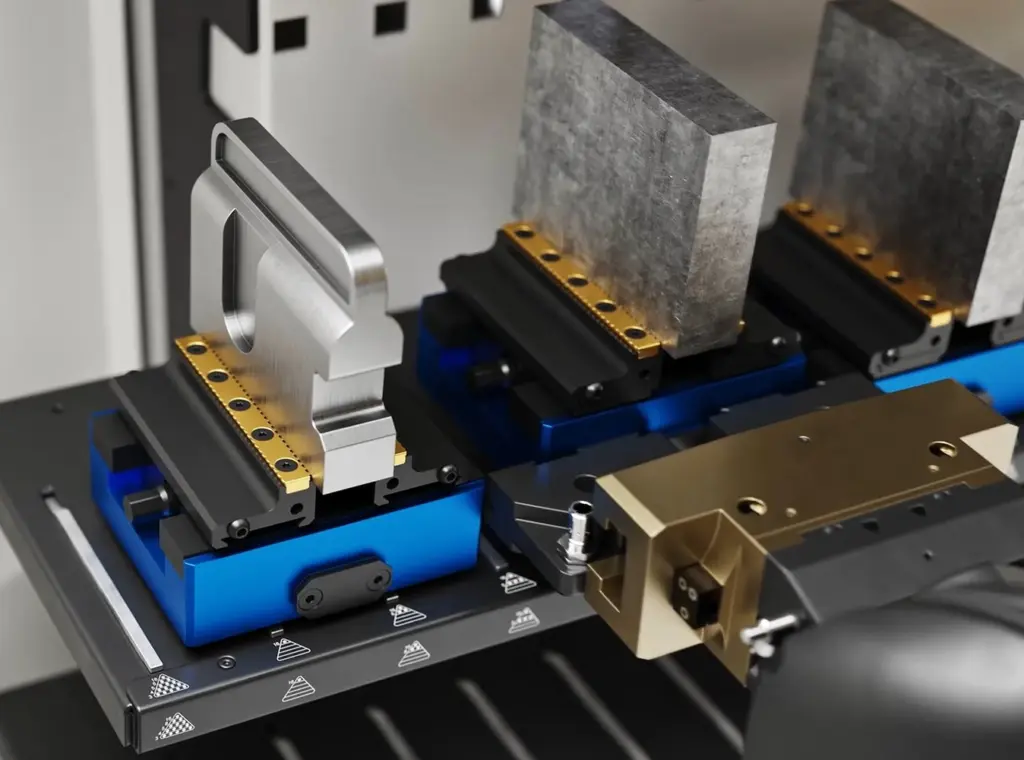
A RockLock™ pneumatic chuck is the receiver half of that handoff. Ejectors lift the tooling out cleanly so the robot never fights resistance, a continuous air blast clears chips and coolant from the interface, and the same air system can confirm clamp/unclamp state, so a misload gets flagged immediately instead of discovered on the next shift.
52mm / 96mm
Interface spacing
Bottom or side
Air-port configuration available on every interface size
Patent-pending
Ejector design for resistance-free robotic pickup
Why Pneumatic Chucks
Built for the handoff between robot and machine.
A pneumatic chuck isn’t just a mounting point, it’s the part of the automation cell that has to work correctly with nobody watching. Here’s what that buys your shop.
Patent-pending ejectors lift tooling seamlessly out of the chuck, so the robot never has to fight to release a part.
A constant air blast through the ejectors keeps the interface clear, addressing one of the most commonly overlooked failure points in unattended machining.
The same air system can signal clamp state, so a misload or tooling error notifies the cell immediately instead of running unnoticed.
Fixture exchange happens directly at the chuck, so the robot always picks up from the same known point, no need for different grippers or reprogramming based on individual parts.
Bottom- or side-port configurations are available on both interface sizes, so air routing fits your existing cell layout.
Support from real machinists, Talk to people who understand toolpaths, tombstones, and tolerances, not a script. Factory support reps available across the country.
A team that stays with you — From first quote to reorder: fast answers, clear lead times, and a crew invested in keeping your spindle turning.
Machine Compatibility
Built to fit the robot cell you're running.
Pneumatic chucks use industry-standard 52mm or 96mm RockLock™ spacing and are machine-agnostic and robot-compatible, supporting a wide range of machine brands and collaborative or industrial robot arms.
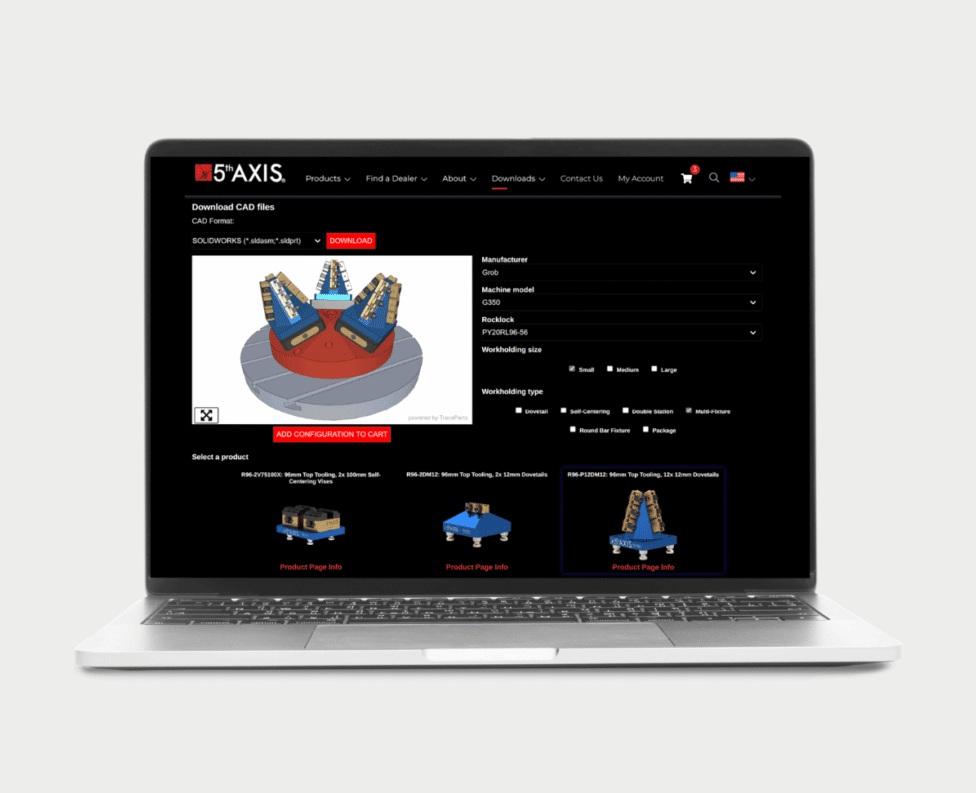
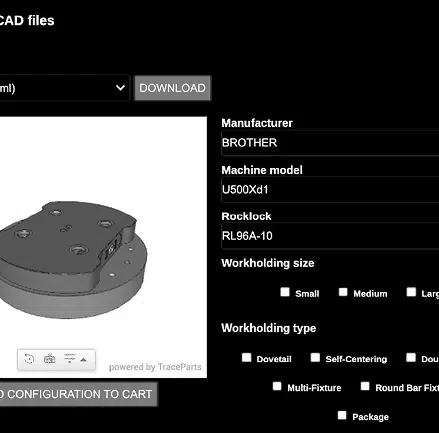
Not sure which port configuration fits your cell? Choose your manufacturer, model, and pneumatic chuck, then download and preview the exact compatible setup — a digital twin you can drop into CAM and check clearances before you buy.
From job shops to high-volume production floors, machinists trust 5th Axis to hold the line.
“This is why you guys are the best! I have about 30 of your products and use them on every CNC machine I own. Best product I’ve seen and worked with—high quality and reasonably priced.”
Gabriel Petre
Owner, Q.M.D Enterprises INC.
“Top-notch product with Grade A customer service to match.”
Doug MacKinnon
Continuous Improvement Engineer, Will-Mor Mfg.
“I am very impressed with your product, and after this interaction, I find your customer service amazing!”
Ejector models (RL_E) add patent-pending pushers that lift tooling out for the robot and provide a continuous air blast for chip/coolant management and clamp confirmation; standard models (RL_P) are the base pneumatic receiver, still robot-compatible and still available in bottom- or side-port configurations, just without the ejector-driven pickup assist and air-blast clearing. Ejector models suit fully unattended cells where a jammed or dirty interface can’t be caught by an operator; standard models suit cells with more frequent operator oversight.
It depends on how air lines are routed in your existing cell, both interface sizes offer both port locations so you can match your current layout. Contact the team if you’re unsure which fits your integration.
No, fixture exchange happens directly at the chuck, so the robot always picks up from the same known point without needing a pallet or different grippers per part.
5th Axis automation hardware is built to be universal and robot-compatible, supporting a wide range of collaborative and industrial robot arms. Reach out and the team will help confirm compatibility for your specific setup.
No, many customers start with pneumatic vises and quick-change fixtures to improve manual processes before scaling to full robotic automation.
Yes. Every pneumatic chuck has an accurate, downloadable 3D model, a digital twin you can drop into CAM to program against real geometry and check clearances before you cut.
Most shops see significant ROI within 6–12 months due to reduced labor, fewer setups, and increased machine utilization, exact ROI depends on volume and machine time cost.