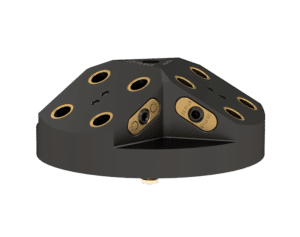
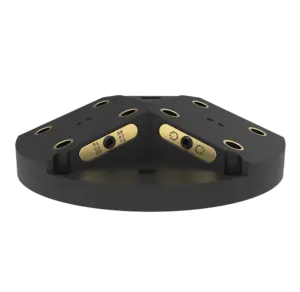
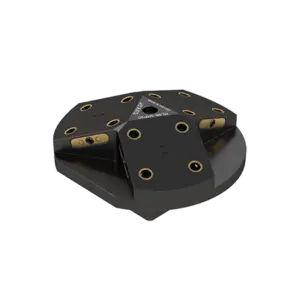
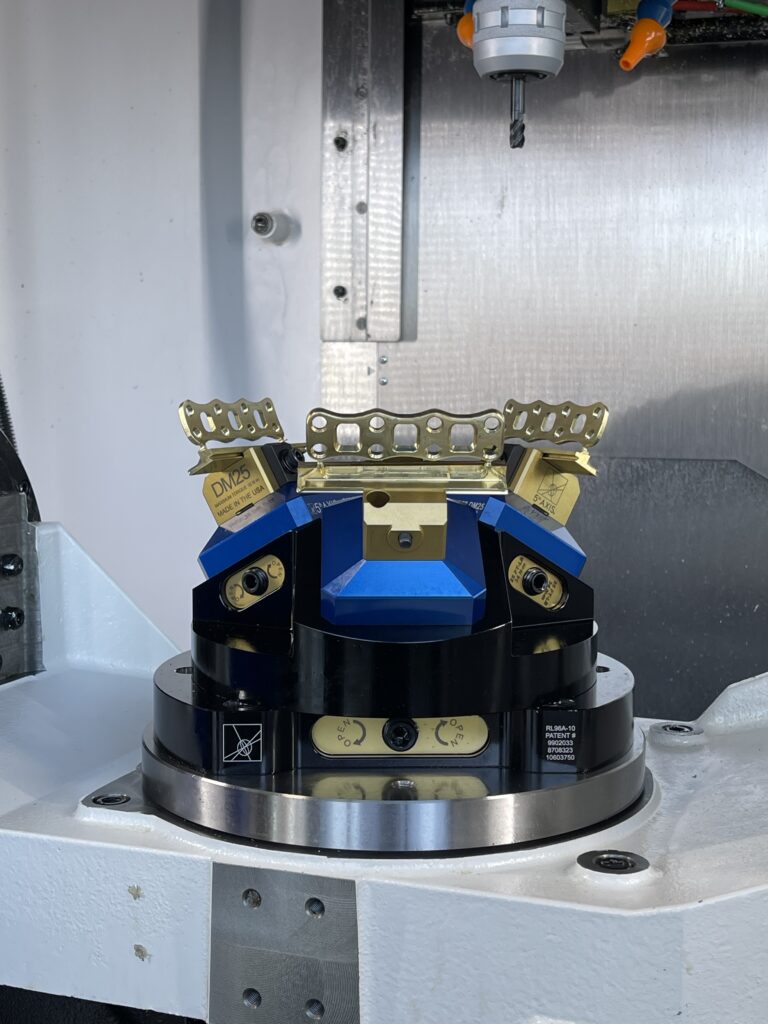
Don’t settle for machining fewer parts per cycle. Multi-face pyramids put several parts in the work envelope at once on 5-axis machines, with the RockLock™ zero-point interface built in, so the whole pyramid loads and unloads in seconds.
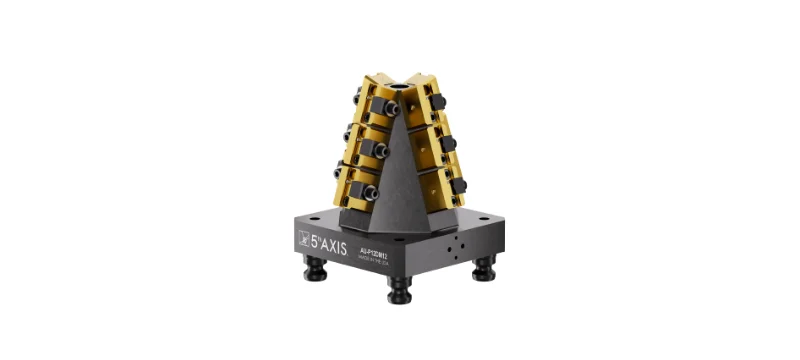
Every pyramid carries RockLock™ pull studs on the base and multiple angled faces on top, so parts load off-line and the whole fixture drops onto a base in seconds. Choose by number of faces, interface size, and mounting style.
One part per cycle is leaving capacity on the table.
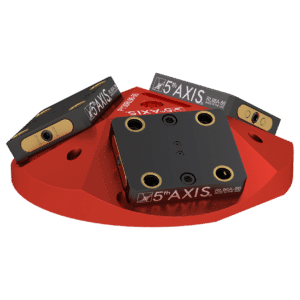
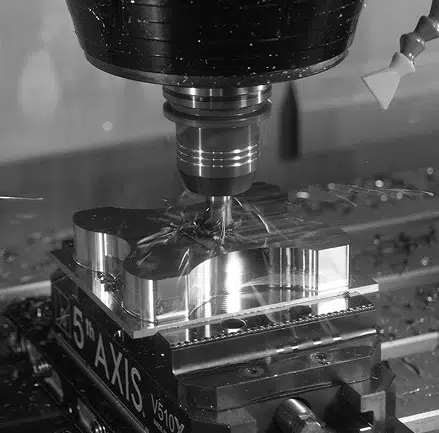
A single vise or fixture holds one part at a time, every cycle spends spindle time on tool changes and rapid moves that don’t cut metal. On a 5-axis machine with room to spare in the work envelope, that’s capacity going unused, cycle after cycle. A RockLock™ pyramid puts several parts in that same work envelope at once. Each face holds its own fixture or vise, tooled up off-line and dropped onto the pyramid with the same RockLock™ interface used everywhere else in the system. Instead of one part per cycle, the machine runs a batch, and changeover is still a drop-and-lock, not a rebuild.
Up to 3x
Component production per cycle
< .0003″
Repeatability
52mm / 96mm
Interface spacing
Why Multi-Position Adapters
Multiply parts per cycle. Not setup time.
A pyramid isn’t just a shape, it’s a way to turn unused work envelope into unused capacity you’re actually running. Here’s what that buys your shop.
Multiple angled faces mean multiple parts (or multiple fixtures) machining in the same envelope that used to hold one.
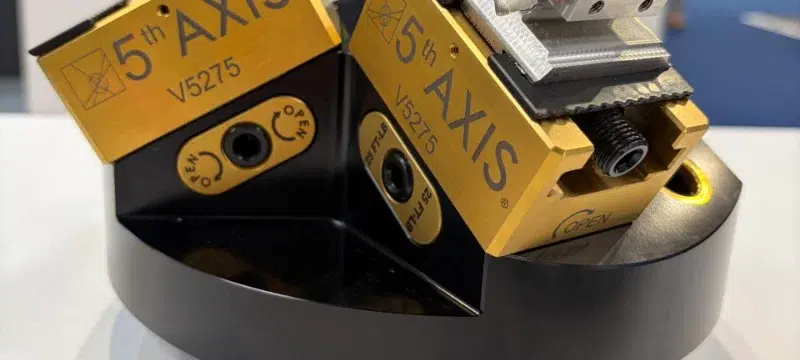
Integrated RockLock™ zero-point studs mean the whole pyramid, every face, every part, locks down and releases with the same allen wrench as any other RockLock™ fixture.
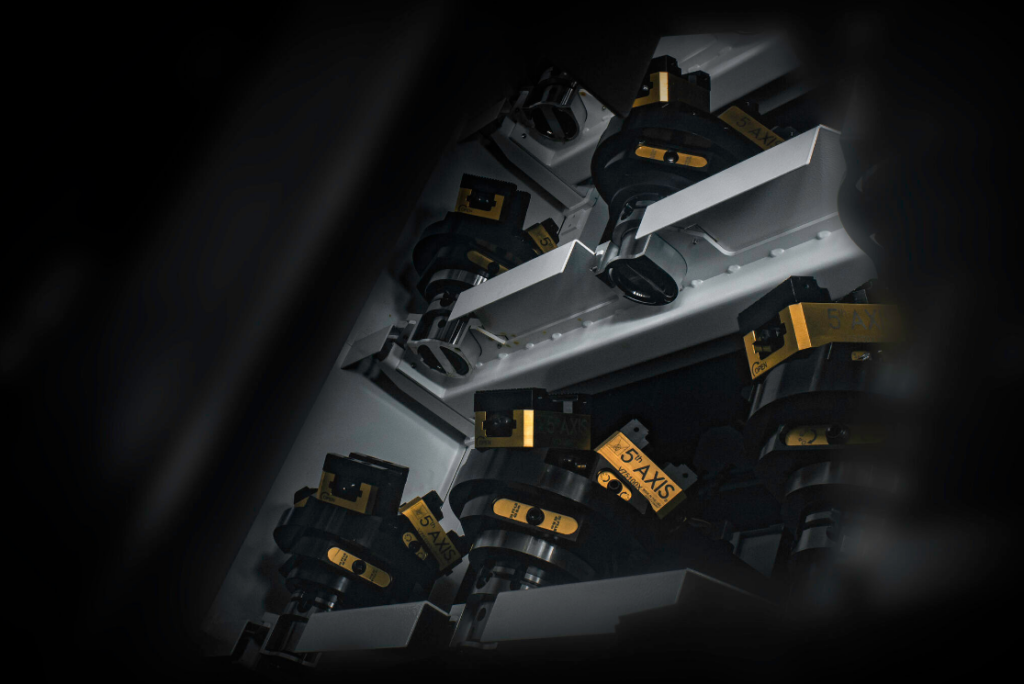
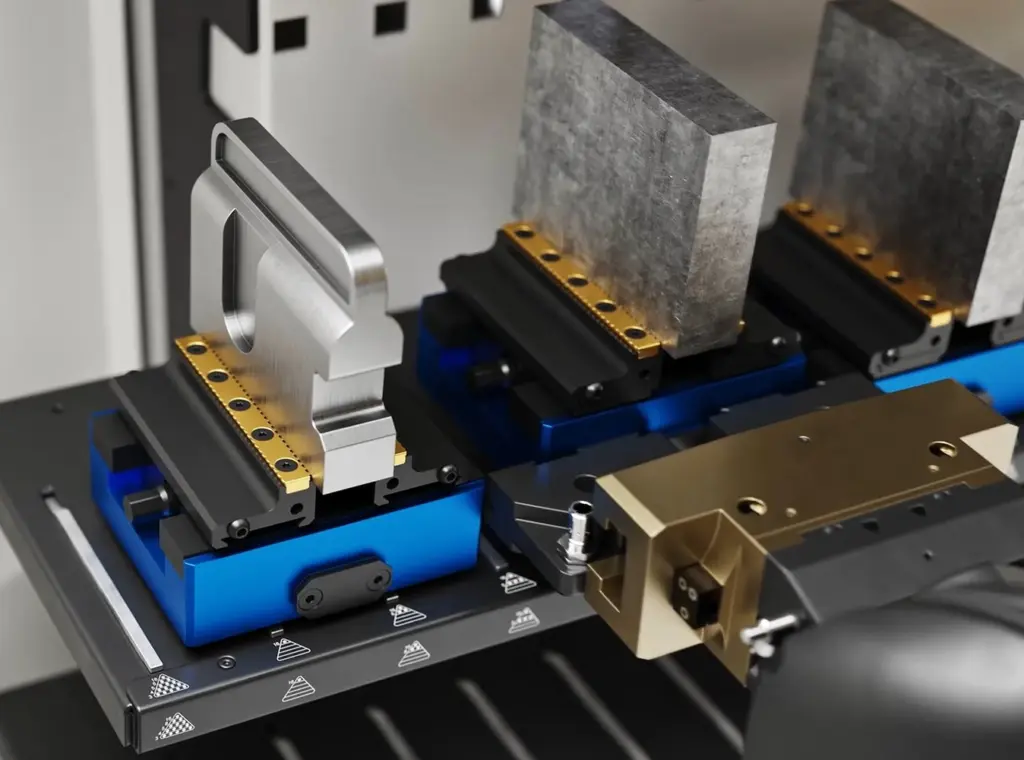
Tool up each face of the pyramid away from the machine while the spindle keeps cutting the current job, then drop the finished pyramid on at changeover.
Every pyramid still carries standard 52mm or 96mm RockLock™ spacing, so it drops onto the same bases and works with the same top tooling as the rest of the catalog.
Support pillars:
Support from real machinists — Talk to people who understand toolpaths, tombstones, and tolerances — not a script. Factory support reps available across the country.
A team that stays with you — From first quote to reorder: fast answers, clear lead times, and a crew invested in keeping your spindle turning.
Machine Compatibility
Built for the 5-axis envelope you're already using.
Pyramids carry industry-standard 52mm or 96mm RockLock™ interface spacing and mount to trunnions, pallets, and machine tables the same way any other RockLock™ base does. Machine make and model are required at order time to confirm fitment and clearance across the pyramid’s faces.
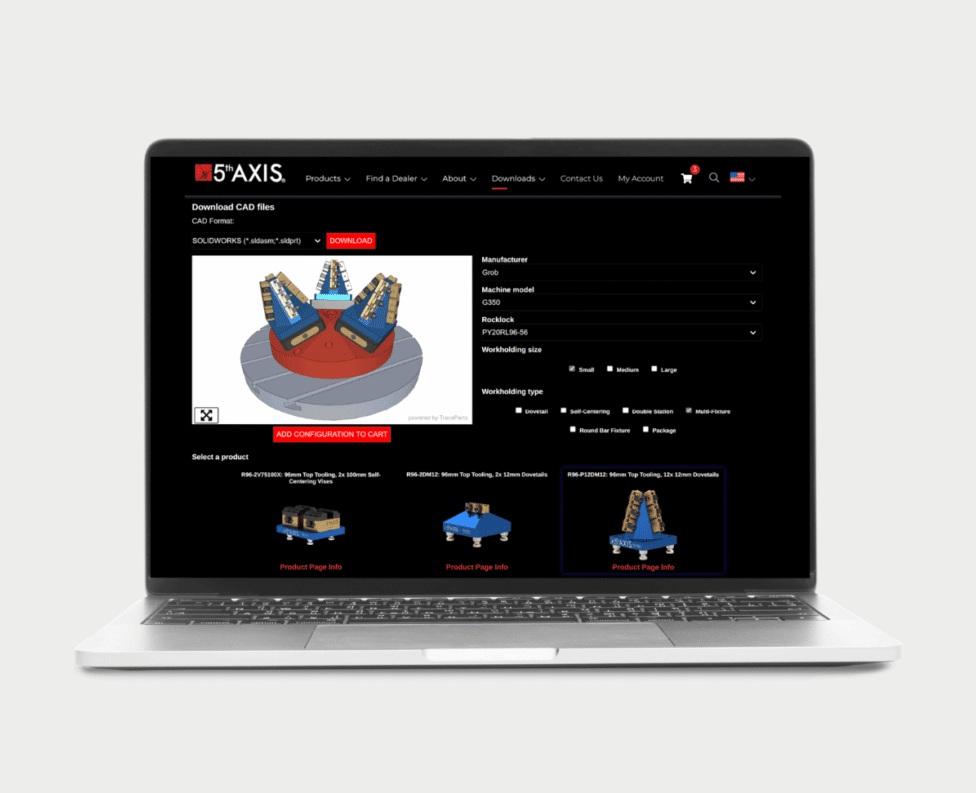
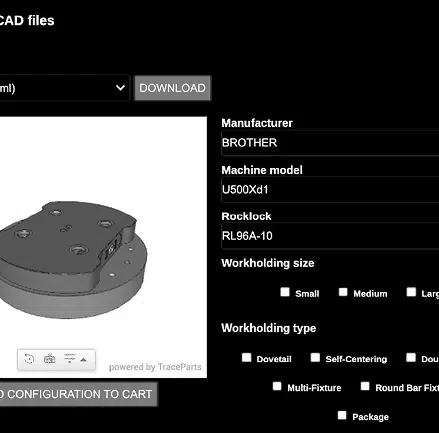
ot sure a pyramid clears your trunnion or tooling? Choose your manufacturer, model, and pyramid, then download and preview the exact compatible setup — a digital twin you can drop into CAM and check clearances before you buy.
From job shops to high-volume production floors, machinists trust 5th Axis to hold the line.
“This is why you guys are the best! I have about 30 of your products and use them on every CNC machine I own. Best product I’ve seen and worked with—high quality and reasonably priced.”
Gabriel Petre
Owner, Q.M.D Enterprises INC.
“Top-notch product with Grade A customer service to match.”
Doug MacKinnon
Continuous Improvement Engineer, Will-Mor Mfg.
“I am very impressed with your product, and after this interaction, I find your customer service amazing!”
Its angled faces put more than one part (or fixture) in the same work envelope a single vise would occupy, so the machine runs a batch instead of one part at a time, without adding cycle steps.
No. Every face carries the same RockLock™ zero-point interface, so the whole pyramid, regardless of face count, locks down and releases in one motion with an allen wrench, the same as any other RockLock™ fixture.
Machine make and model are required at order time to confirm fitment, since pyramid geometry needs to clear trunnions, rotary heads, and tooling specific to your setup. Use the 3D Configurator to check clearance before you buy.
Yes, each face mounts independently and accepts any RockLock™-compatible top tooling, so faces can be configured differently depending on the parts you’re running.
Both put more parts in the work envelope, but the machine and part geometry usually decide it: pyramids are the better fit on 5-axis machines and pallet changers, where the tool needs angled access to several faces at once; tombstones are the better fit on HMCs and larger 4th/5th-axis setups, where flat, square faces are cut one at a time as the table indexes. If your part needs multi-axis access mid-cycle, start with a pyramid; if your part is machined face-by-face, start with a tombstone.
Yes. Every pyramid has an accurate, downloadable 3D model, a digital twin you can drop into CAM to program against real geometry and check clearances before you cut.
Technical support from people who actually machine, factory support reps across the country, and a customer team that handles quotes, lead times, and reorders fast.